

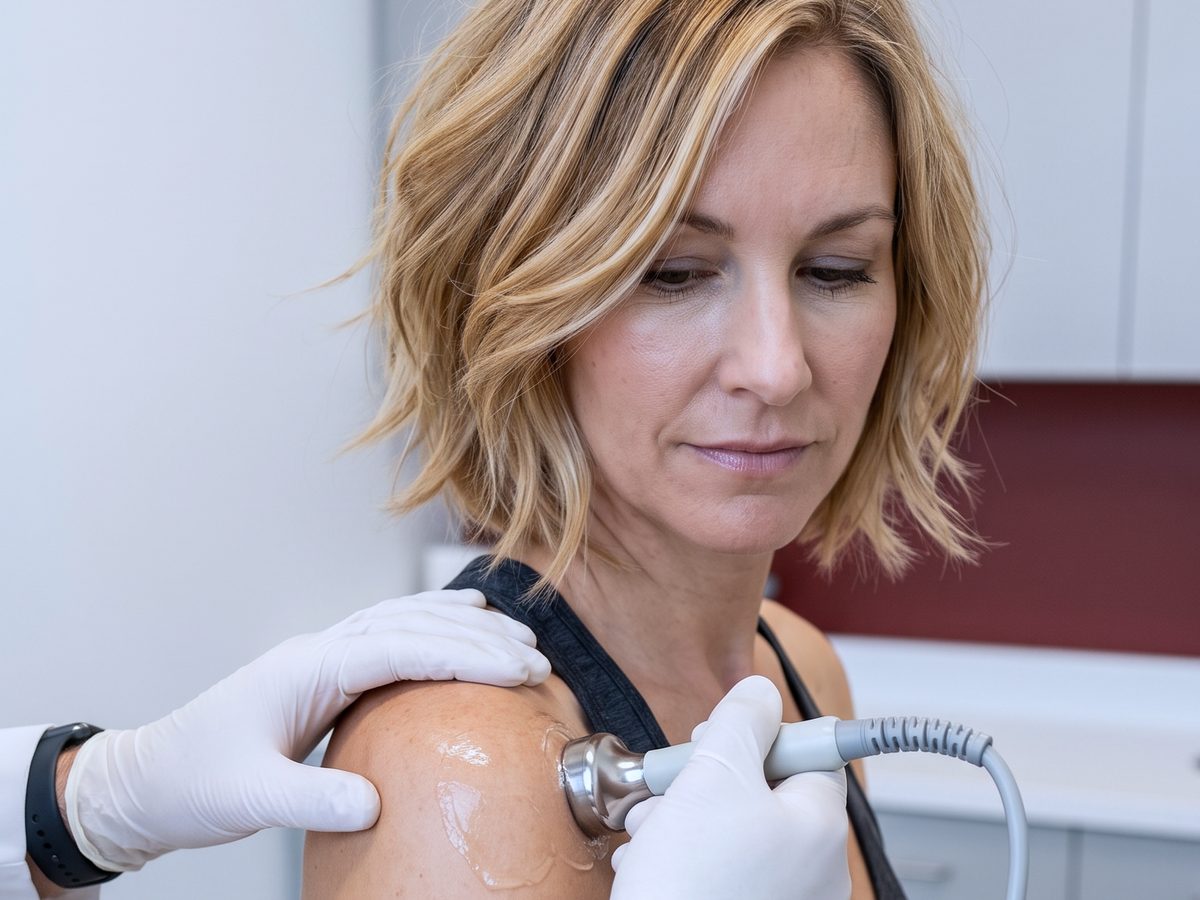
La terapia de ondas de choque extracorpórea (ESWT) es un tratamiento no invasivo que aplica ondas de presión acústica a través de la piel sobre tendones, músculos y tejidos blandos adoloridos. Las aplicaciones comunes en Doral, FL incluyen fascitis plantar, codo de tenista/golfista y tendinopatías crónicas. La fascitis plantar crónica es la indicación de ESWT más estudiada en la literatura revisada por pares (NIH/PMC); las revisiones reportan beneficio en algunos pacientes cuando la terapia conservadora ha fallado, y los resultados varían. Cada sesión dura aproximadamente 4–10 minutos, no se necesita anestesia y la mayoría de los pacientes regresan a la actividad normal el mismo día. Según la American Orthopaedic Foot & Ankle Society, la fascitis plantar afecta aproximadamente a 1 de cada 10 adultos en EE. UU. durante su vida (estimación 2022), y es la razón más común por la cual los pacientes vienen a nuestra clínica de Doral preguntando sobre ondas de choque. En Viva Centers, nuestros médicos bilingües revisan sus tratamientos previos, imágenes y objetivos de actividad antes de recomendar un curso de ESWT — y somos honestos sobre qué condiciones están bien estudiadas y cuáles no. Los resultados varían y no todas las personas son candidatas — si usted no lo es, se lo decimos.
Condiciones Comúnmente Tratadas con Ondas de Choque
La fascitis plantar crónica es la indicación de ESWT más estudiada, junto con varias tendinopatías que no han respondido a la terapia conservadora. Según la guía de pacientes de AAOS y revisiones sistemáticas NIH/PMC, las siguientes condiciones típicamente justifican una consulta de ondas de choque cuando 6+ semanas de cuidado conservador no han resuelto el dolor:
- Fascitis plantar y dolor crónico del talón — la indicación de ESWT más común y mejor estudiada
- Tendinopatía del tendón de Aquiles — inflamación crónica y degeneración del tendón de Aquiles
- Codo de tenista (epicondilitis lateral) y codo de golfista (epicondilitis medial)
- Tendinopatía del manguito rotador y tendinitis calcificante del hombro
- Tendinopatía patelar (rodilla de saltador)
- Síndrome de dolor del trocánter mayor (bursitis de cadera)
- Puntos gatillo miofasciales y tensión muscular crónica
- Síndrome de estrés tibial medial (periostitis tibial / shin splints)
- Neuroma de Morton y otros dolores crónicos del antepié
Cómo Funciona la Terapia de Ondas de Choque — y Qué Todavía No Se Sabe
La terapia de ondas de choque entrega ondas de presión acústica controladas a través de la piel hacia el tendón o la fascia adolorida. Siendo francos con usted: el mecanismo biológico exacto no está resuelto. La determinación de cobertura de CMS dice que el mecanismo terapéutico "no se conoce por completo", y NICE en el Reino Unido lo describe igual. Se han propuesto varias explicaciones — cambios en el flujo sanguíneo local, efectos sobre la remodelación del tejido e interferencia con las señales de dolor — pero siguen siendo propuestas, no hechos comprobados. Lo que sí está documentado es más práctico:
- Se aplica a través de la piel — sin incisión, sin inyección y sin anestesia
- Una sesión dura de 4 a 10 minutos y usted se va caminando el mismo día
- Un curso típico es de 3 a 6 sesiones semanales, no una sola visita
- Cuando ayuda, la mejoría se desarrolla entre 4 y 12 semanas, no de un día para otro
- Se usa en tendinitis calcificante, donde los depósitos de calcio se ven en las imágenes
- No le funciona a todo el mundo — la candidatura se decide en la evaluación, no antes
¿Qué se Siente Durante la Terapia de Ondas de Choque?
Esta es la pregunta más común antes de la primera visita. Respuesta honesta:
- La pieza de mano se coloca contra la piel con una capa fina de gel de ultrasonido
- Cada pulso se siente como un golpeteo mecánico rápido — más agudo que un masaje pero no como un pinchazo
- En una fascia plantar o codo de tenista sensibles, los primeros 30–60 segundos son típicamente los más incómodos, luego el cuerpo se aclimata
- La mayoría de los pacientes califican la incomodidad en 3–6 de 10 durante el tratamiento, y la intensidad se aumenta gradualmente para que usted la controle
- No se necesita anestesia — los pacientes pueden conducir a casa
- Algunos pacientes sienten dolor leve o moretón en el área tratada por 24–48 horas; avísenos si siente algo más que molestia leve para reevaluarlo
Secuencia de Sesiones — Qué Esperar Durante un Curso
Un curso típico de ESWT en nuestra clínica de Doral se estructura así:
- Consulta inicial — examen, revisión de tratamientos previos e imágenes, confirmación de candidatura
- Verificación de seguro + estimado escrito antes de cualquier tratamiento (la mayoría de ESWT es de pago propio o cubierto parcialmente)
- Sesión 1 (semana 1) — familiarización con el dispositivo, identificación de puntos sensibles, primer tratamiento calibrado de 4–6 minutos
- Sesiones 2–4 (semanas 2–4) — tratamientos semanales con intensidad ajustada según tolerancia
- Sesiones 5–6 (semanas 5–6) — tratamientos finales del curso inicial; evaluamos el progreso
- Reevaluación en la semana 8–12 — cuando hay mejoría, suele desarrollarse 4–12 semanas después de la sesión final
- Coordinación con fisioterapia, cambios de calzado y consejos de manejo de carga para resultados a largo plazo
ESWT vs. Fisioterapia y Otras Opciones
ESWT no es un reemplazo de la fisioterapia — funciona mejor como complemento. Así se comparan las opciones para la indicación más común, fascitis plantar:
- Cuidado conservador primero: estiramientos, calzado de soporte, férulas nocturnas, control de peso y modificación de actividad funcionan para la mayoría de los pacientes en 6 semanas
- Fisioterapia: aborda la cadena cinética — flexibilidad del gemelo, fuerza intrínseca del pie, mecánica de marcha
- ESWT: se considera cuando 6+ semanas de cuidado conservador no han resuelto el dolor; la fascitis plantar crónica es su uso más estudiado
- Inyección de corticosteroide: alivio a corto plazo pero con riesgo pequeño de ruptura de la fascia plantar; no es una solución a largo plazo
- Cirugía (liberación de la fascia plantar): reservada para casos que han fallado todo lo anterior — rara vez necesaria cuando ESWT se ofrece antes
- Construimos un plan escalonado con usted en lugar de saltar a la opción más agresiva
Quién Es un Buen Candidato para Ondas de Choque
La mejor evidencia respalda ESWT en pacientes con el siguiente perfil:
- Dolor crónico de tendón o fascia de más de 6 semanas a pesar del descanso, estiramiento y cuidado conservador
- Tratamientos de primera línea fallidos — fisioterapia, cambios de calzado, AINEs
- Atletas y adultos activos con lesiones por sobreuso — fascitis plantar, tendinopatía de Aquiles, rodilla de saltador
- Adultos con tendinitis calcificante o bursitis crónica confirmada por imagen
- Pacientes que buscan una alternativa no quirúrgica antes de considerar inyecciones o cirugía
- Consultas bilingües en inglés/español disponibles — la mayoría de nuestros pacientes de Doral prefieren visitas en español
Recursos Autorizados y Guía Clínica
Fuentes
- AAOS — Información para pacientes sobre ortopedia — American Academy of Orthopaedic Surgeons
- NIH/PMC — Revisión sistemática de ESWT para fascitis plantar — U.S. National Library of Medicine
- CMS — Base de datos de cobertura de Medicare — Centers for Medicare & Medicaid Services
Preguntas Frecuentes
¿Qué es la terapia de ondas de choque (ESWT) y cómo funciona?
La terapia de ondas de choque extracorpórea (ESWT) es un tratamiento no invasivo que entrega ondas de presión acústica al tejido lesionado. El mecanismo biológico exacto no está resuelto — la determinación de cobertura de CMS dice que "no se conoce por completo" y NICE lo describe igual — así que no afirmamos saber cómo actúa a nivel celular. Originalmente desarrollada en los años 1980 para el tratamiento de cálculos renales, ESWT es ahora ampliamente utilizada en medicina ortopédica y deportiva para condiciones crónicas de tendones y fascia — sobre todo fascitis plantar. Según AAOS y la literatura NIH/PMC, es más apropiada cuando el cuidado conservador no ha resuelto el dolor después de 6 o más semanas.
¿Duele la terapia de ondas de choque?
La mayoría de los pacientes describen la sensación como un golpeteo mecánico rápido con molestia leve a moderada, calificada en aproximadamente 3–6 de 10 durante el tratamiento. La intensidad se ajusta en tiempo real a su tolerancia. Cada sesión dura 4–10 minutos y cualquier molestia posterior generalmente se resuelve en 24–48 horas. No se requiere anestesia y los pacientes pueden conducir a casa. Los primeros 30–60 segundos en un área sensible suelen ser los más incómodos; una vez que el tejido se aclimata, el resto de la sesión es mucho más fácil.
¿Cuántas sesiones de ondas de choque necesito?
Un curso típico es de 3–6 sesiones semanales para la mayoría de las condiciones. La fascitis plantar y las tendinopatías se tratan comúnmente con un curso de 5–6 sesiones; para indicaciones menores a veces se planifican 3. Su médico evalúa el progreso entre visitas y puede extender o acortar el plan. Cuando hay mejoría, a menudo se desarrolla 4–12 semanas después de la sesión final — por lo que es normal sentir solo un cambio modesto mientras aún está en el curso, y algunos pacientes no mejoran.
¿Qué condiciones trata la terapia de ondas de choque?
ESWT es más estudiada para fascitis plantar crónica, tendinopatía de Aquiles, epicondilitis lateral (codo de tenista), epicondilitis medial (codo de golfista), tendinopatía del manguito rotador, tendinitis calcificante del hombro y tendinopatía patelar (rodilla de saltador). También se usa para síndrome de dolor del trocánter mayor, puntos gatillo miofasciales, periostitis tibial y neuroma de Morton. Generalmente se considera solo para condiciones crónicas que no han respondido a 6+ semanas de cuidado conservador, y los resultados varían.
¿El seguro cubre la terapia de ondas de choque?
La cobertura varía ampliamente. Algunos planes de Medicare y comerciales cubren ESWT para diagnósticos específicos como fascitis plantar crónica después de que la terapia conservadora ha fallado; muchos planes aún clasifican ESWT como investigacional y no la cubren. La cobertura depende de su plan específico y de las reglas del contratista de Medicare que aplican en Florida; la ESWT para condiciones musculoesqueléticas frecuentemente no está cubierta. Nuestro equipo verifica su plan y proporciona un estimado escrito antes del primer tratamiento. Llame al +1 305 209 0001 para verificación de beneficios.
¿Cuánto cuesta la terapia de ondas de choque en Miami?
Cuando el seguro no cubre ESWT, los pacientes en Doral pagan por sesión o por paquete. El precio depende del área del cuerpo, de si se usa onda de choque radial o focal y de cuántas sesiones recomiende el médico. No damos un precio de curso antes de la evaluación, porque el número de sesiones es una decisión clínica — pero usted recibe un estimado por escrito antes de comenzar cualquier tratamiento, y en ciertas épocas del año manejamos precios promocionales por paquete. Llame al +1 305 209 0001 para tarifas actuales.
¿Qué se siente durante el tratamiento de ESWT?
La pieza de mano se coloca contra la piel con gel de ultrasonido. Cada pulso se siente como un golpeteo mecánico rápido — más agudo que un masaje de tejido profundo pero no lo suficientemente doloroso para requerir anestesia. La intensidad se aumenta gradualmente para que usted mantenga el control. La mayoría de los pacientes sienten sensibilidad residual leve por 24–48 horas, y le pedimos que nos avise si siente algo más que molestia leve. Si experimenta algo más que dolor leve, infórmenos y ajustamos la intensidad en la siguiente sesión.
¿En qué se diferencia la terapia de ondas de choque de la fisioterapia?
ESWT y la fisioterapia funcionan mejor juntas, no en competencia. La fisioterapia aborda la biomecánica — flexibilidad del gemelo, fuerza intrínseca del pie, marcha y mecánica de carga que causaron la lesión. ESWT se aplica sobre el tendón o la fascia adolorida. Para fascitis plantar crónica, los resultados más fuertes vienen de combinar estiramientos y manejo de carga con un curso de 4–6 sesiones de ESWT, en lugar de depender de uno solo. Coordinamos referencias a fisioterapia cuando está indicado.
¿Hay efectos secundarios o contraindicaciones de la terapia de ondas de choque?
Los efectos temporales comunes incluyen dolor leve, hinchazón, enrojecimiento y ocasionalmente moretones pequeños en el sitio de tratamiento durante 24–48 horas. ESWT está contraindicada para pacientes con trastornos de coagulación o en anticoagulación terapéutica, infección activa en el sitio de tratamiento, embarazo, marcapasos, placas de crecimiento en pacientes esqueléticamente inmaduros y tumores en el área de tratamiento. Su médico revisa su historial médico completo antes de la primera sesión. Consultas bilingües disponibles — llame al +1 305 209 0001.