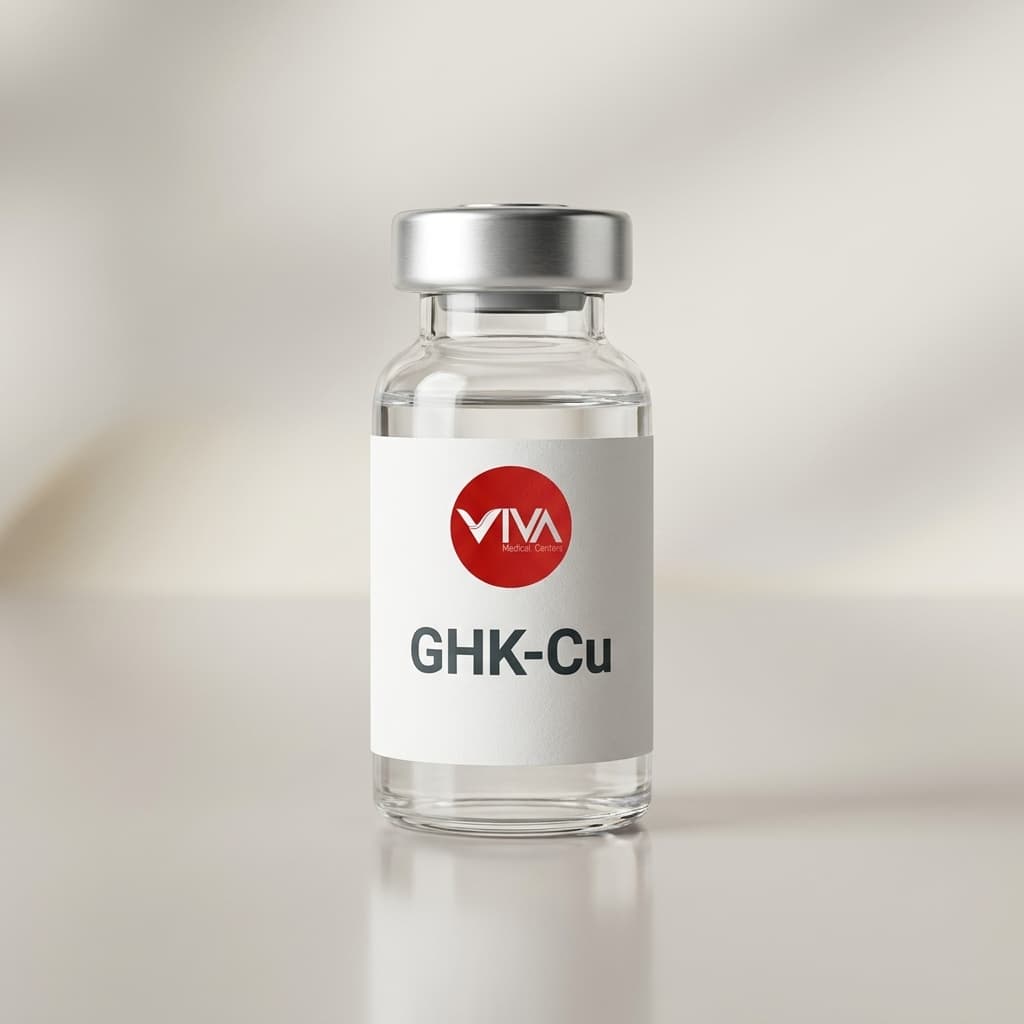
Un péptido natural que se une al cobre, ampliamente estudiado en investigación de piel y cicatrización, y usado en cosméticos tópicos. En medicina regenerativa, metabólica y de longevidad, GHK-Cu es uno de los compuestos que más interés ha despertado. A continuación, nuestros médicos resumen los beneficios que la investigación ha explorado y lo que sugieren los estudios — para que tome una decisión informada con la opinión educada de un médico.
Cómo Interactúa con el Cuerpo — en Palabras Simples
GHK-Cu es un pequeño péptido transportador de cobre que existe de forma natural en el plasma sanguíneo y disminuye con la edad. En investigación de la piel actúa como una señal que orienta a las células hacia la producción de colágeno y la remodelación del tejido — por eso es un ingrediente común en cosméticos tópicos con respaldo.
Beneficios que la Investigación Ha Explorado
Esto es lo que investigadores y clínicos han estudiado sobre GHK-Cu:
- Colágeno y apariencia de la piel (investigación cosmética)
- Cicatrización de heridas (investigación)
- Actividad antiinflamatoria (investigación temprana)
Objetivos que los Pacientes Suelen Consultar
Estas son las metas con las que las personas suelen preguntar por GHK-Cu — son temas de conversación con su proveedor, no efectos prometidos:
- Textura, firmeza y apariencia general de la piel
- Salud del cabello y cuero cabelludo
- La apariencia de cicatrices y zonas de reparación
Áreas y Sistemas del Cuerpo Estudiados
Dónde se ha enfocado la investigación de este péptido en el cuerpo (áreas de estudio, no efectos prometidos):
- Piel y colágeno
- Cabello
- Zonas de heridas y reparación
Dónde Está la Evidencia — Honestamente
El uso tópico (sobre la piel) cuenta con investigación cosmética en humanos significativa. El uso inyectable o sistémico es otra historia — no está aprobado por la FDA ni establecido, y nuestros proveedores se lo dirán con claridad.
Cómo Puede Ayudarle Viva Centers
Lo que ofrecemos es atención médica de un centro con licencia:
- Una consulta con un médico para revisar sus objetivos y su historial
- Una opinión honesta y educada sobre lo que la evidencia respalda
- Opciones aprobadas por la FDA cuando son apropiadas, recetadas a través de farmacias con licencia
- Monitoreo y seguimiento como parte de su atención
Fuentes
Preguntas Frecuentes
¿Para qué se ha estudiado GHK-Cu?
Un péptido natural que se une al cobre, ampliamente estudiado en investigación de piel y cicatrización, y usado en cosméticos tópicos. Las áreas que la investigación ha explorado incluyen: Colágeno y apariencia de la piel (investigación cosmética); Cicatrización de heridas (investigación); Actividad antiinflamatoria (investigación temprana).
¿Cómo puedo saber si GHK-Cu es adecuado para mí?
Reserve una consulta. Un médico revisa sus objetivos, su historial y la evidencia actual, y le da una recomendación personalizada y legal. Llame al (305) 209-0001.
¿Está GHK-Cu aprobado por la FDA?
Presente en productos cosméticos tópicos; el uso inyectable/sistémico no está aprobado por la FDA para estos fines. Información educativa únicamente — una consulta puede revisar qué es apropiado y legal para usted.